
Formula Dé
Vroom Vroom Vroom went the dice ...

If you broke games down into “genres” (instead of mechanisms), then the two biggest are probably “Fighting” and “Racing.” That’s not surprising if you consider sports. “Who is fastest?” and “Who is strongest/toughest?” are the Ur-sports. Sure, we now have rhythmic gymnastics, synchronized swimming and biatholon; just as we now have lots of tiny, weird and wonderful themes1, but “Racing” and “Fighting” were the first sports.
So far the 20th Century Project has showcased several combat/fighting games, with only Hare and Tortoise as a pure racing game. But even in the narrow field of Auto racing, several titles deserve consideration2.
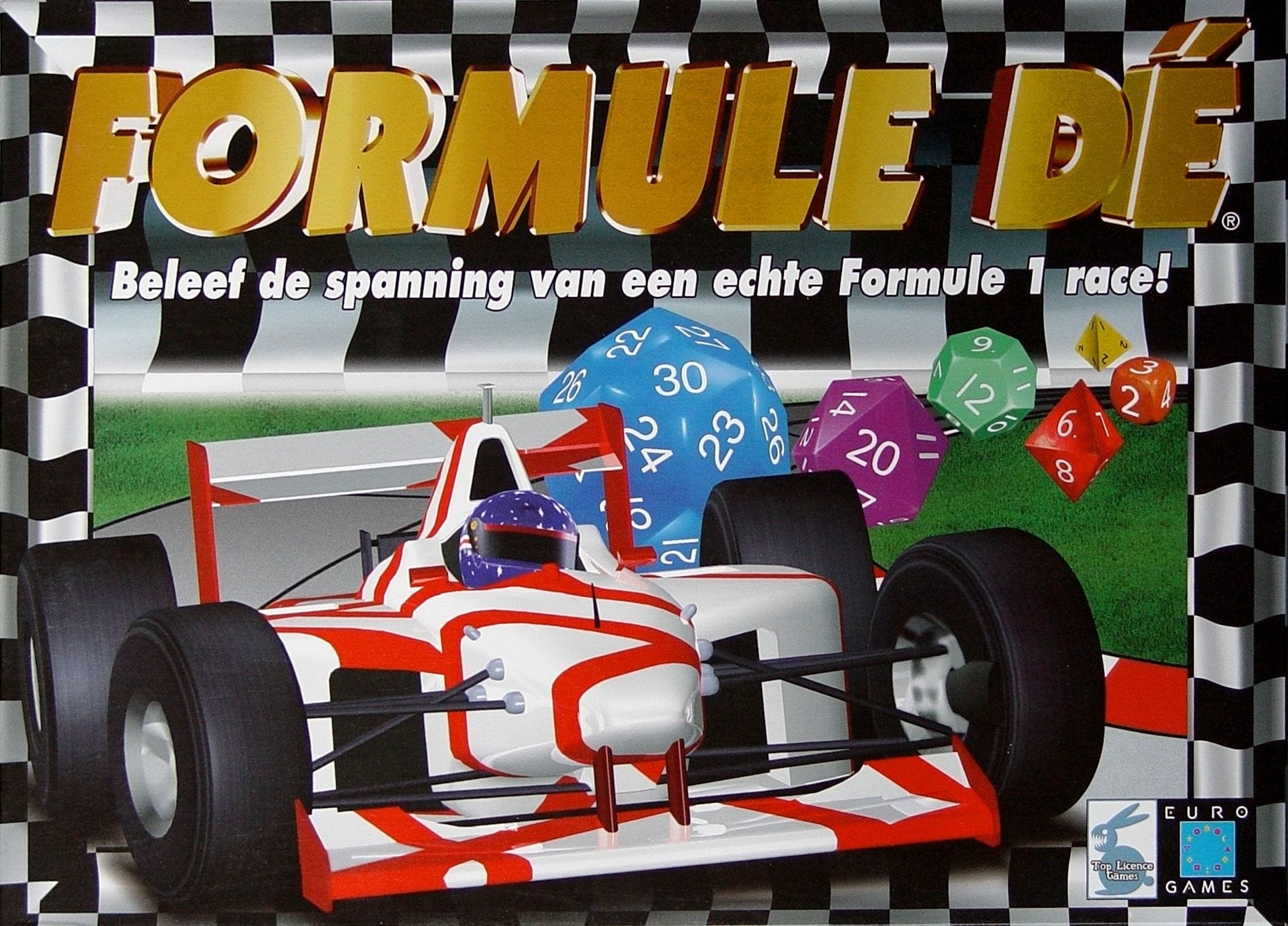
Laurent Lavaur’s & Eric Randall’s Formula Dé may not be the most innovative game, but it certainly has been one of the most enduring racing games, meriting reprints and revisions. Each player controls two cars and each turn you can upshift or downshift. The higher the gear, the bigger the values on the die. The top speed is the big blue die which might send you up to 30 spaces (whereas the yellow d4 sends you one or two)3. In straightaways you can maneuver as you like, but in corners you have to follow the lines and spend one or more turns between the big red lines.
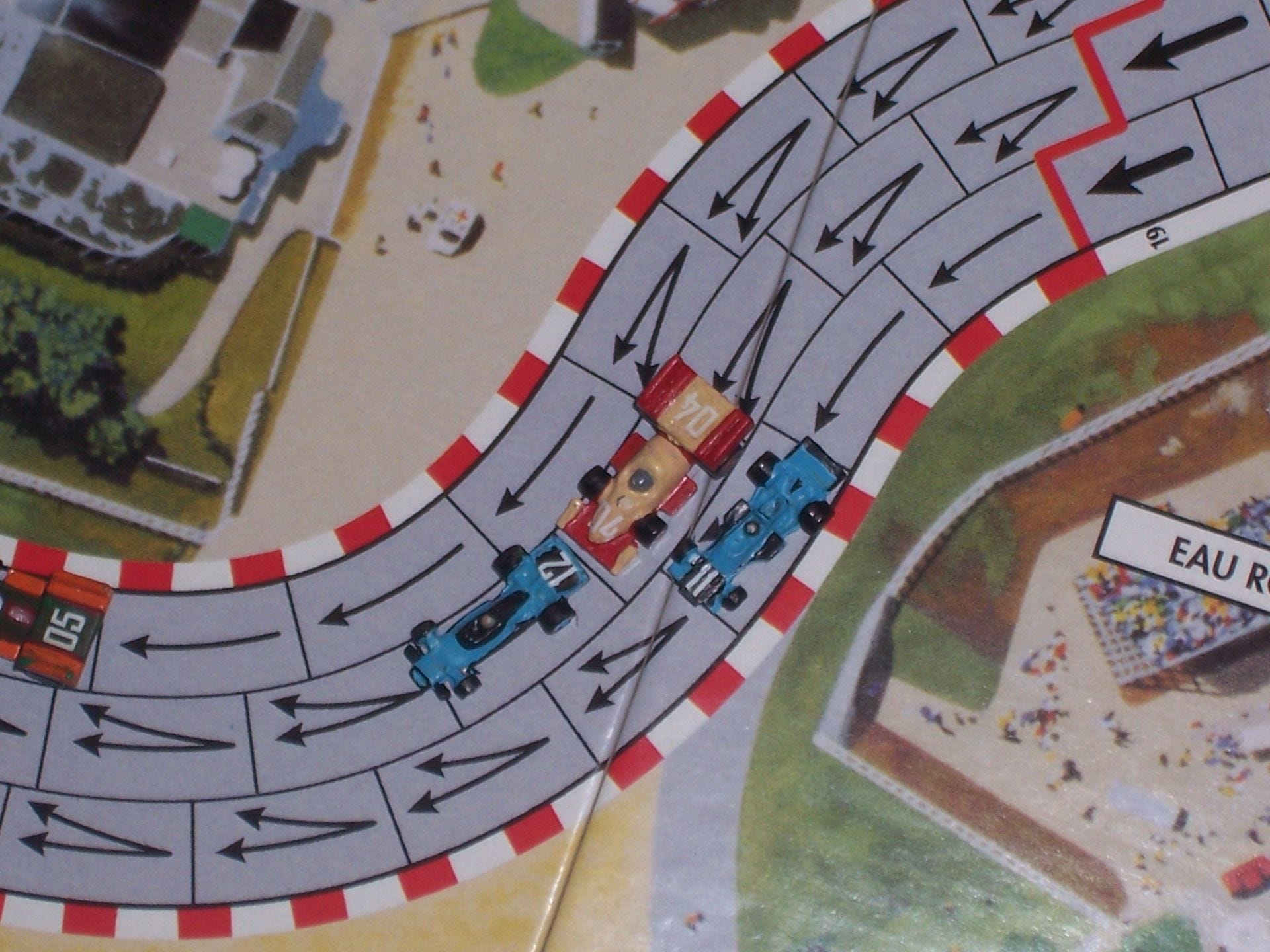
Each car’s dashboard shows the current gear and ratings … if you barely overshoot a corner you can ‘spend’ tires burning through, or brakes to stop. End near someone in a corner you may brush against each other and lose body points. If you need to spend a point you don’t have (or drastically overshoot a corner)? Out of the race.
Formula Dé is a dice game and “push your luck” game, but also a true racing game. Each tracks has a number of good lines. You want to take a corner as fast as possible (to blast through the straightaways in high gear), but too high and you’ll crash
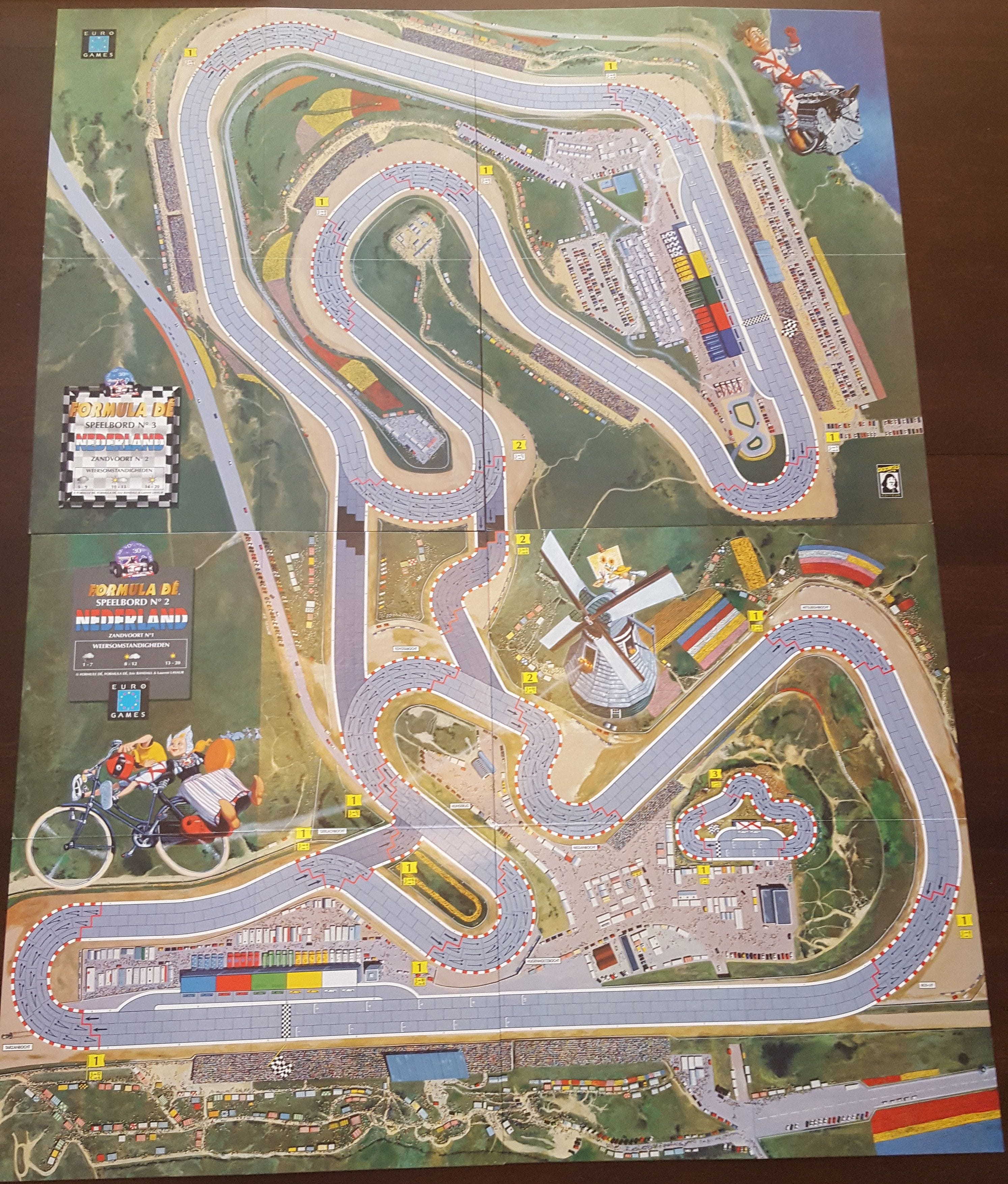
Formula Dé also boasts an incredible number of expansion tracks, mostly modeled on real world races. You can race Monaco or Interlagos or Silverstone or the Hockenheim ring. At our local game store we set up a league and had a race every two weeks and raced a ‘full season’ over a half year.
In one sense, Formula Dé’s innovation was … a lack of innovation. (Many) other games have a points systems for drivers and cars and different tracks; this strips it down to the basics. Pick your gear, grab the appropriate die, go. “No dawdling” isn’t an official rule in the game, but our league disallowed hesitating and take backs …. you touch your finger (or car) to a space you’ve driven there.4
(Formula One Races are known for speed and noise, not quiet contemplation).
Running a Formula Dé league did personally burn me out of the game, but like any good game, there are always people rediscovering it (or fans who keep it alive). Not all influential games are good, and not all good games are influential. Frankly I’m not sure that this game belongs in The 100 Most Influential Games of the 20th Century. But it’s not unreasonable to toss its name into the ring.
“Weird” if you dislike it, “Wonderful” otherwise.
And then you have horse racing, bicycle racing, boat racing ….
In the first edition you only used a twenty sided die and had a chart for the different gears, but the idea is the same.
I am indebted to Tim Trant for introducing me to this as a standard variant for any race game, similar to Chess’s “You touched it, you move it” rule.
I'm also a fan, Brian, so this is a shoo-in for me.
Though I was recently taken to task by one of my old gaming buddies for preferring it to HEAT: Pedal to the Metal. He cited the possibility of your engine blowing up if you get unlucky dice rolls. But it's something I can live with. :-)
Back in the early 2000s my games group had a Formula Dé league, which I even won a couple of times - great fun. And the race reports are still (!) on my website: https://www.pevans.co.uk/Swiggers/FormulaDe.html#Top