
Netrunner
A game with no limits

After Magic: The Gathering summoned the entire genre of Collectable Card Games into existence, there was a mad rush of entries into the field. Just as Star Wars meant that Hollywood dumped barrels of money into space TV shows and movies, Magic spawned countless imitators1. From one game in ‘93, to ten in ‘94 to forty-five in ‘95, the rush was on. Most were simple cash grabs, although some had their charms2. But like most of the Star Wars rip offs, most were done by people who were simply copying what worked, without understanding either the original game (or network effects3).
The Collectable Card Games that really took off, post-Magic, could not be mere rip-offs. They had to have some hook beyond just “hey, the cards are collectable.” Perhaps some designers got lucky, but a few thought long and hard about the format, and what it meant, and didn’t just copy a successful formula.
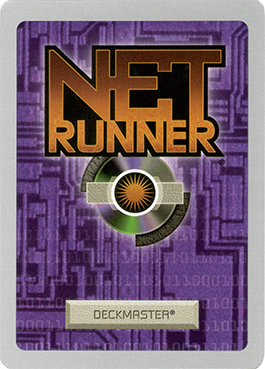
Richard Garfield (Magic’s original creator) was one of those few. With his new-found wealth and fame, he was free to take his time and Netrunner sported several innovations.
First, It ditched the fantasy and magic and went in the opposite direction: Cyberpunk.
Second, positions became asymmetrical. One player controlled the corporation, trying to advance it’s agenda for dominance (such as controlling the media, the military, pop culture, etc). Agendas are worth Victory Points, in that if you get enough of them you win, but fulfilling an agenda would (usually) provide a tangible in-game benefit. The other player was a single hacker, trying to reveal the corporations nefarious plans to the world, literally copying and publishing the agenda.
Third, Netrunner learned from Magic’s mistakes. Expecting a solid game, Magic’s immense popularity meant that people were willing to spend quite a bit of money collecting cards, which affected the game4. Netrunner was designed to let you have as many copies of any card as you wanted, and this was achieved by more careful balancing, but it was also countered by the next point …
Finally — and most importantly — Netrunner is a game of bluff and counter bluff. Unlike most CCGs, where you see the vast majority of your opponent’s assets on the table, the corporation plays their cards face down and (in some cases) may require multiple turns of income and time to activate the cards (in an agenda’s case, fulfill it (Rome wasn’t dominated in a day, after all). But that face down card may not be an agenda, it may be a trap.
The cards set out to protect that agenda (or trap) may be various types of intrusion countermeasures. Perhaps they simply kick out the hacker. Perhaps they ‘tag’ you.5 Maybe it fries your hardware, or … your brain.
Similarly, the Runner can attack the corporation in a variety of ways. Perhaps the will try to go after the cards in the corporation’s hand. Perhaps they’ll go after the cards in the deck, or discard pile. Agendas could be in any of those places. Perhaps they’ll install back doors to skip countermeasures.
In Magic you had “what cards will I put into my deck” and “what cards do I expect to see played against me?” If you know all your opponents are going to play a certain type of deck, you can put in hard counters to that. But once the game starts, the bluffing ends (the cards are either useful, or not).
Netrunner puts the cat-and-mouse / bluff-and-double-bluff in the gameplay itself. Just as in poker, you can sometimes save a losing position by daring your opponent with a big bet. Put down a card and spend time moving it towards completion. No protection, sure go ahead and take it. Obviously it’s a trap, right? Sometimes you win with a pure bluff. And sometimes, it’s not a bluff.
The design didn’t completely negate “most money wins,” but it meant two experienced players could have a tense game with a random starter deck; and it was easier to overcome a spending deficit.
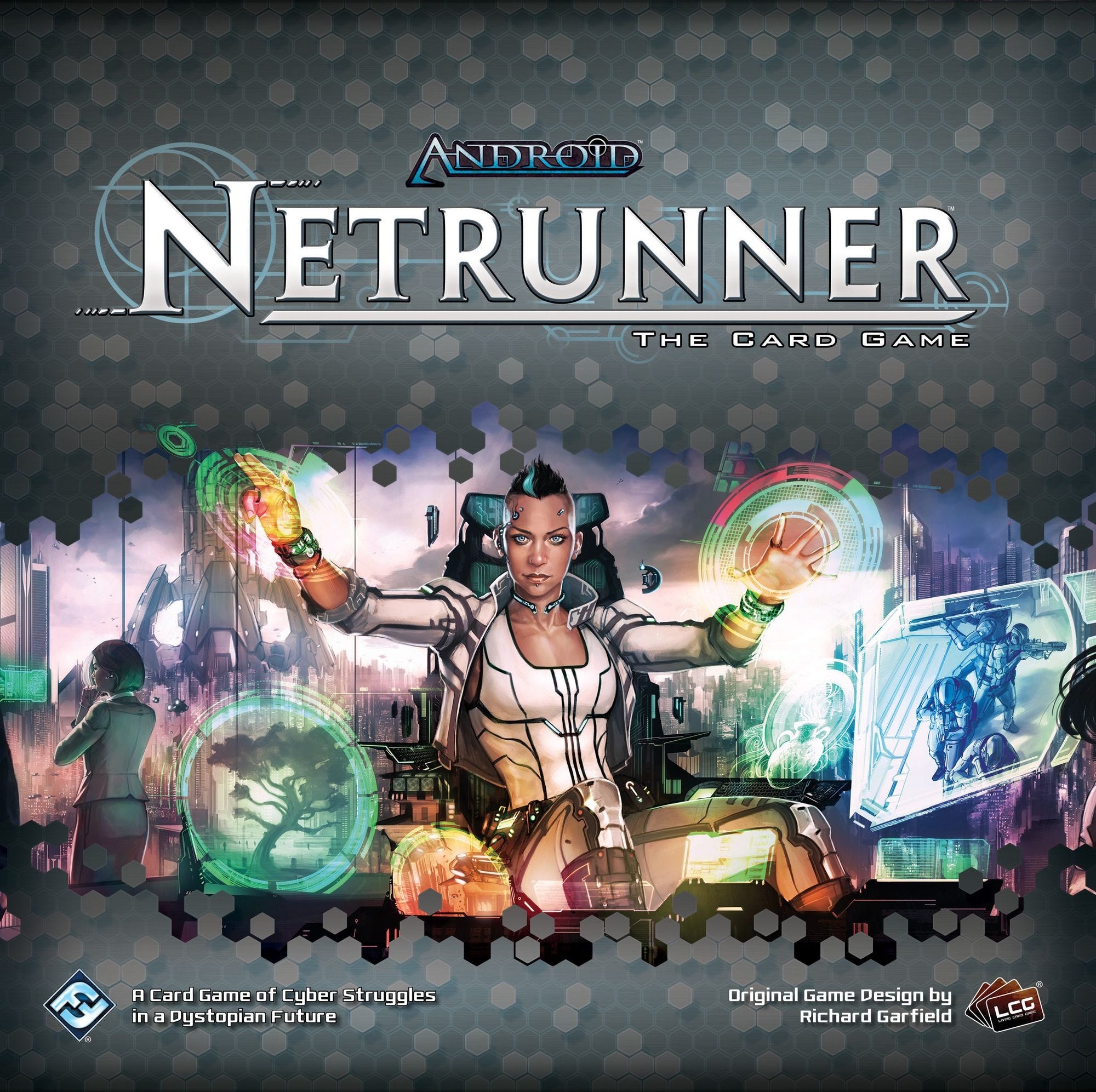
Netrunner only had the first printing and expansion, partially a victim of Magic’s success and partially a victim of Garfield’s design choices. Because he built the game to “stop Mr. Suitcase,” the sales weren’t all that Wizards of the Coast hoped they would be.6 But the design lived on, and was resurrected for a “Living Card Game7” a few decades later.
Netrunner clearly does not have the reach of Magic. (No CCG does). But it expanded the design space of collectable card games. And while it was not the first asymmetric game (by far8), it was the first CCG with Asymmetry designed into the player roles, and not just the decks, and quite playable (enjoyable even) with just a single starter deck. For all of those reasons, I think Netrunner is worthy of consideration for the 20th Century Project
Although Wikipedia does in fact count them.
Illuminati: New World Order was discussed last month.
Unlike most games, you need everyone to buy into a collectable card game to make it fun for everyone. But if only one player likes a board game enough to buy it, everyone (in that group) can still play.
Magic switched from 40 card decks with no card limits to 60 card decks with some cards limited to a single copy and all cards limited to four copies about a year after release.
The hacker’s big advantage is anonymity. But once they know where you live, goons may show up. But does the corporation have goons? Who knows?
Just as liquor stores and sports books, most of the money comes from a small subset of customers.
New card packs would show up in stores every few weeks/months, but packs were not random, if you bought the pack you got everything you’d need.
I have no idea - another game I've never played! Not even come close to.
On fact, it's only when I read this description I realised it's a CCG!
"But once the game starts, the bluffing ends"
This is just wildly false; I've won "unwinnable" games at high-level tournaments by bluffing, and some bluffing happens pretty much all the time (obviously, bluffing is completely ineffective against inexperienced players). I constantly see folks overselling the degree of bluffing in Netrunner compared to Magic, but Netrunner's facedown cards are just on the table while Magic's facedown cards are in the hand, which is not really much of a difference. Magic has even played in the "facedown cards on the table" space a bunch of times, with Morph, Disguise, Cloak, etc., but it's fully unnecessary to have those cards to have a game with plenty of bluffing.