
Stratego
Minesweeping before Windows

Every year, Christmas break meant a long drive to my Grandparents house for a week long stay. There were fun things to do there; but no board games. On Christmas my sibling and I might get a game to be taken back home afterwards, but they had nothing but a deck of cards (admittedly that could be enough). But as they got more grandchildren, my grandparents finally bought a game or two “to keep here” so that we’d have something to do when it was too cold (and after they’d stopped us from sliding down the stairs on rugs1).
One was Scrabble. That worked OK for me (the oldest) versus adults, but the multi-year gap meant it wasn’t great to play against my younger siblings/cousins. For that we had Stratego.
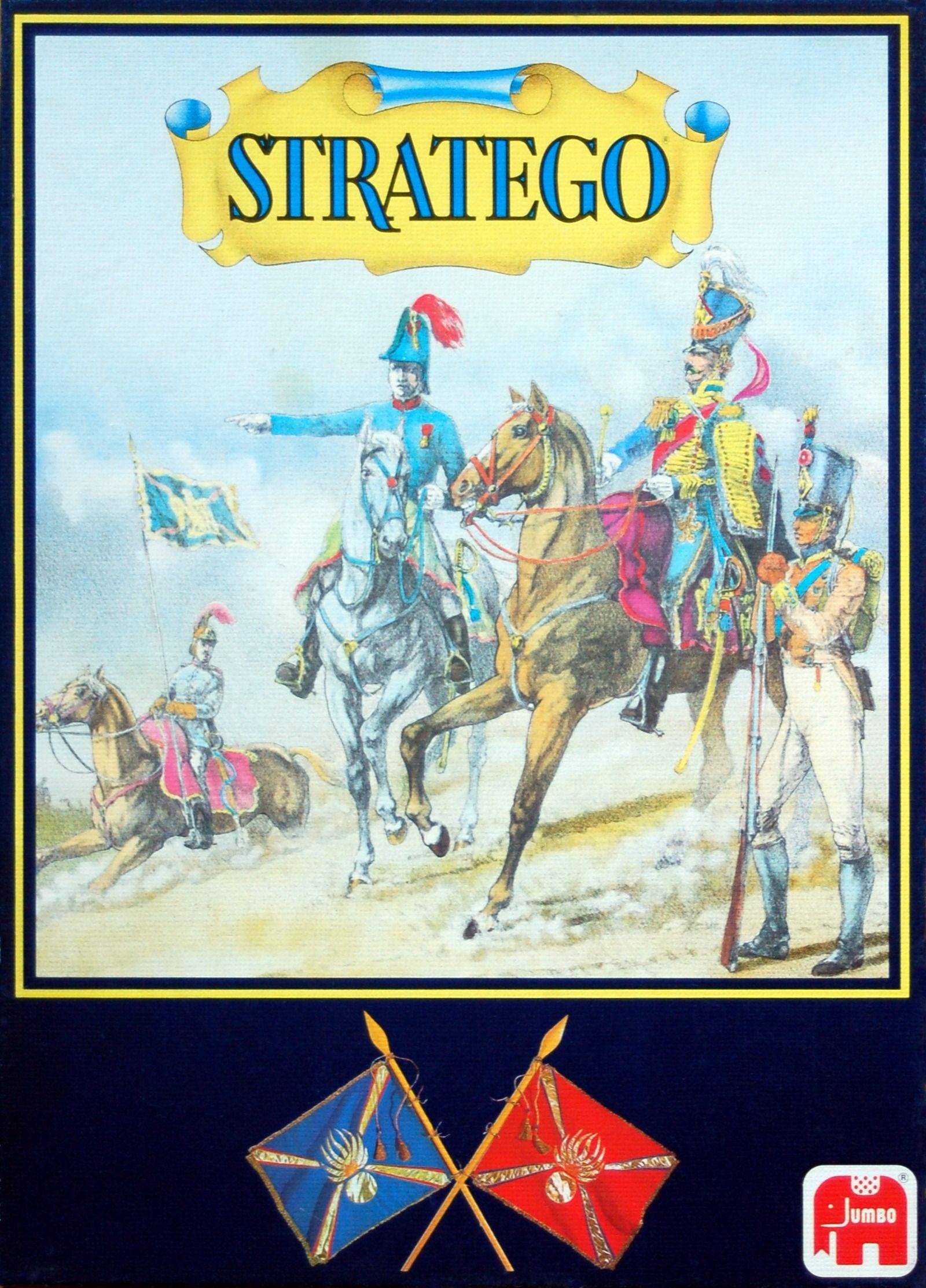
Jacques Johan Mogendorff’s Stratego is actually a remake of L’Attaque — a game from 1909 is similar to Gunjin Shōgi: A children’s version of Japanese chess with face down pieces until attacked. So even thought Stratego was pushing 40 years of publication when I first played, its roots stretched back to the 19th century (if not earlier).
All the games share the same idea: You setup your pieces so that your opponent can’t see them, and you have a ‘flag’ or ‘king’ that results in loss if captured. Higher ranking pieces defeat lower ranking in combat.2 There are also bombs that explode if attacked (killing the attacker) and a minesweeping pieces to pick off bombs.
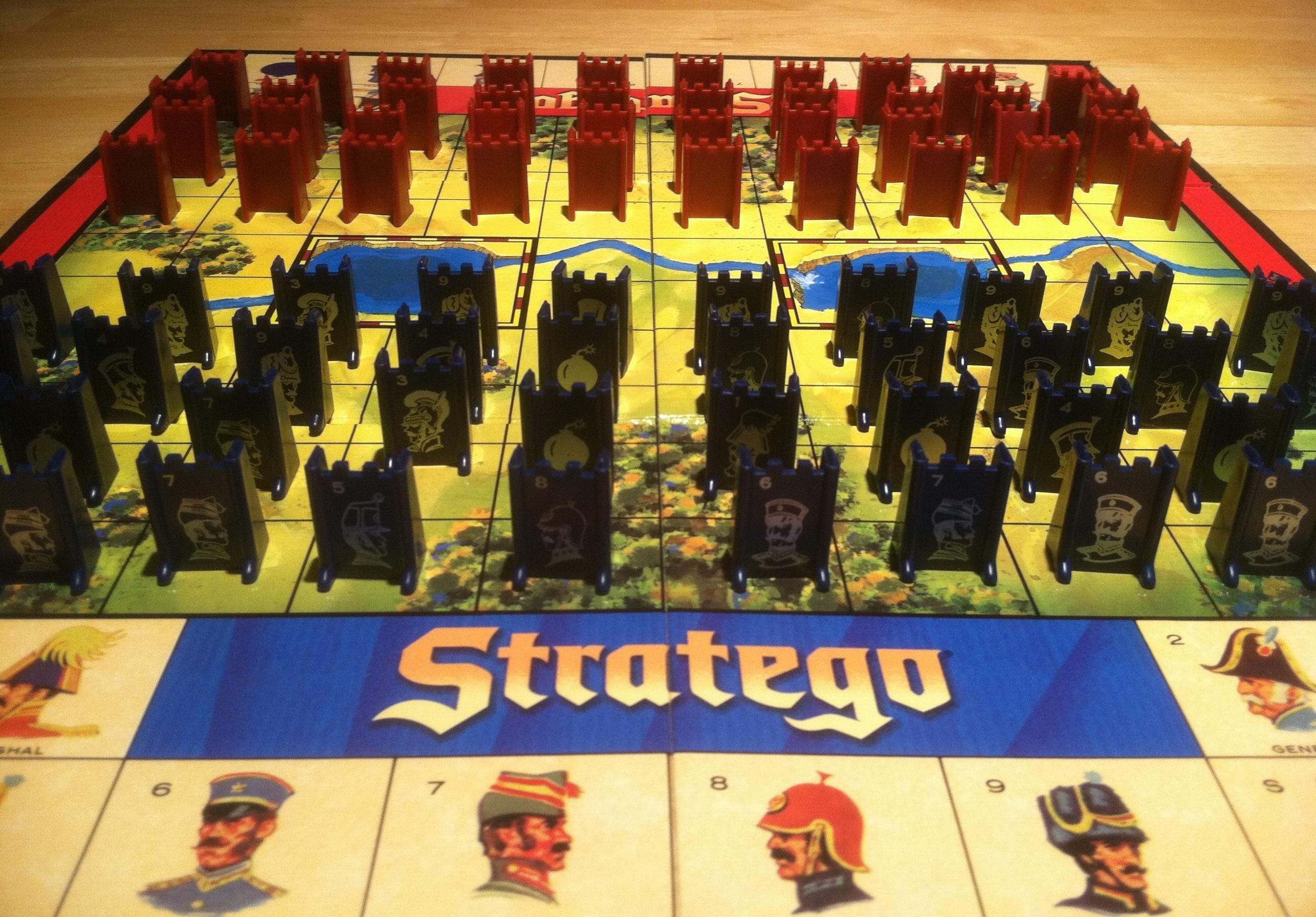
The reason for its longevity is the same as the reason I rarely played Scrabble or Chess with my cousins. The ‘better’ player can lose. Stratego can be a game of calculation and discipline — Google’s DeepNash built a Stratego engine a few years ago and the AI will often shuffle pieces around (as much as the rules allow) to keep bombs well hidden and avoid giving up information.
Kids don’t do that. We rush forward and slap pieces together and reveal. And sometimes a five- or six-year old will do something silly that works like a charm. Putting the flag up front and pretending the corner is the standard “flag surrounded by bombs” when it is in fact “a weak piece just good enough to kill a minesweeper surrounded by bombs.” Sure, I won more often than I lost, but unlike the other games my little cousins could sometimes grasp victory and even when they didn’t they could laugh at my annoyance when “they did the wrong thing” and it worked. Even if it was temporary.
So for one week a year, my siblings and cousins and I got our Napoleonic Wars on (not that we recognized the theme) and marched troops towards each other, sometimes being blown to smithereens by bombs, until we captured the flag.
At least, we did until we could get bundled up and go play in the snow.
I understood that the box in the back of my grandparents closet was “old,” even thought it was new, the imagery seemed ancient … and everything in my grandparents house seemed old3. But until I was researching this article I didn’t realize just how old the game was. Yet it is still played by children, has a world championship, and has dedicated AIs.
Which makes it a candidate for the inclusion into The 100 Most Influential Games of the 20th Century.
I said there were fun things to do.
In L’Attaque and the version of Stratego I had, the lower numbers were actually higher ranking; but in European versions of Stratego the higher ranking numbers were higher ranking, and neither side of the Atlantic wants to give in as to who is right.
In my defense — they had a wooden hand-cranked telephone on the wall. Sure, they used a new plastic one day-to-day, but if you’d told 8 year old me that the average appliance in that house was older than they were, I’d have believed it.